

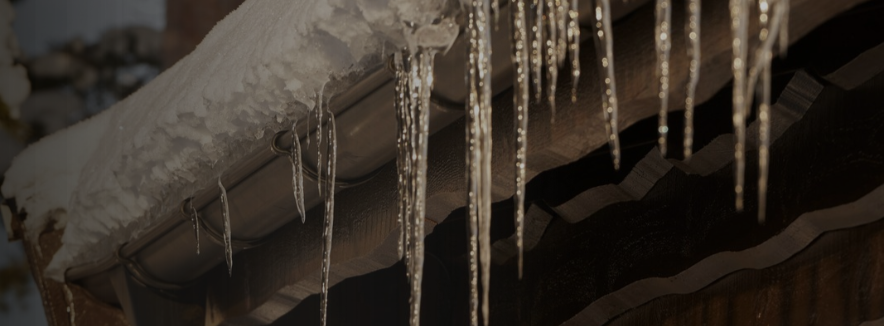
In this guide, we’ll explain how gutter guards work in winter, what homeowners should know about ice buildup, and which preventive measures can help protect your property.
Winter can be tough on your home’s roofing and drainage system. When snow melts, temperatures drop, and water freezes along the roofline, ice dams can develop and cause serious damage. Fortunately, proper gutter maintenance and the right gutter protection system can help reduce some of the risks associated with winter drainage problems.
But do gutter guards actually prevent ice dams? The answer is a little more complicated than you might expect. While gutter guards help keep leaves, twigs, and other debris out of your gutters, they cannot eliminate the main causes of ice dam formation.

What Are Ice Dams and Why Do They Form?
Ice dams are thick ridges of ice that develop along the lower edges of a roof. They typically form when heat escapes from the attic and warms the upper sections of the roof, causing accumulated snow to melt.
As the melted snow flows toward the colder roof edges, it freezes again. Over time, additional water collects behind this frozen barrier, potentially working its way underneath shingles and into the home.
Common causes of ice dams include:
- Poor attic insulation that allows indoor heat to escape.
- Inadequate attic ventilation.
- Air leaks around ceiling fixtures, chimneys, and attic access points.
- Heavy snow accumulation followed by freezing temperatures.
- Existing drainage problems caused by clogged gutters.
Ice dams can damage shingles, fascia boards, roof structures, and interior ceilings. That’s why addressing the underlying causes is essential.
Do Gutter Guards Help Prevent Ice Dams?
Yes, gutter guards can help reduce certain conditions that contribute to winter drainage problems, but they are not a standalone ice dam prevention solution.
Gutter guards are designed to keep leaves, pine needles, twigs, and other debris from entering your gutter system. By reducing blockages, they help rainwater and melting snow drain more efficiently through gutters and downspouts.
This is particularly important during seasonal temperature changes when snow begins to melt during the day and refreezes overnight.
However, ice dams primarily develop because of uneven roof temperatures and heat escaping through the attic. Even a properly installed gutter guard system cannot correct poor insulation or inadequate ventilation.
According to This Old House, 27% of surveyed homeowners identified preventing gutter clogs or flooding as their main reason for installing gutter guards. The same survey found that 93% of homeowners were satisfied with how effectively their guards blocked debris.
These findings demonstrate why gutter protection is valuable for maintaining a functional drainage system, even though it cannot guarantee protection against ice dams.
How Gutter Guards Improve Winter Drainage
A properly selected and installed gutter protection system offers several advantages during colder months.
1. Reduces Debris Buildup
Leaves, pine needles, dirt, and shingle grit can accumulate inside gutters and restrict water movement. Gutter guards help prevent much of this material from entering the drainage system.
2. Supports Better Water Flow
When gutters and downspouts remain relatively clear, melting snow and rainwater have a better opportunity to drain away from the roofline.
3. Reduces Overflow Risks
Blocked gutters can cause water to spill over their edges, potentially affecting siding, fascia, foundations, and landscaping. Gutter guards help reduce debris-related blockages that contribute to these problems.
4. Makes Seasonal Maintenance Easier
Gutter guards reduce the frequency of manual gutter cleaning, although occasional inspections and maintenance are still necessary.
Which Types of Gutter Guards Work Best in Winter?
Not all gutter guards perform equally in snowy or freezing conditions. Choosing the right design depends on your roof, local climate, and the type of debris surrounding your property.
Here are three common options:
Micro-Mesh Gutter Guards
Micro-mesh systems use fine screens to block smaller debris, including pine needles and roof particles. They provide excellent filtration, but homeowners should ensure that the mesh remains clean and that water can drain properly during freezing conditions.
Metal Screen Gutter Guards
Aluminum and stainless steel screens provide a practical way to keep larger debris out of gutters. Their durability and relatively simple design make them suitable for many residential properties.
Brush Gutter Guards
Brush-style guards allow water to pass between their bristles while catching larger debris. However, leaves and smaller particles can collect within the bristles, making periodic cleaning important.
For homes exposed to heavy snowfall, material strength, secure fastening, and proper installation are just as important as filtration performance.
Why Proper Installation Matters
Even high-quality gutter guards may underperform if they are installed incorrectly.
Poor gutter pitch can prevent water from flowing toward downspouts, while loose fasteners can allow guards to shift under the weight of snow, ice, or accumulated debris.
Before installing gutter guards, homeowners should check:
- Whether gutters have the correct slope for drainage.
- Whether brackets and fasteners are securely attached.
- Whether downspouts are clear and properly positioned.
- Whether the existing gutters have leaks, sagging sections, or structural damage.
- Whether the selected guard system is suitable for local winter conditions.
Professional installation helps ensure that the entire drainage system works as intended.
Professional Gutter Guard Installation for Year-Round Protection
Choosing the right gutter guards is only part of protecting your home. Proper measurements, compatible materials, and secure installation all play an important role in long-term performance.
Our professional Gutter Guard Installation Service helps homeowners protect their gutter systems against leaves, debris, and drainage problems throughout the year. We focus on selecting suitable protection solutions and ensuring that every component is properly installed.
If you’re tired of frequent gutter cleaning or want to improve your home’s drainage system before winter arrives, contact our team to learn more about our installation options.
Investing in professional gutter protection can help reduce maintenance demands and support better water management around your property.
How to Prevent Ice Dams Beyond Gutter Guards
Since gutter guards cannot eliminate the primary causes of ice dams, homeowners should combine gutter protection with other preventive measures.
Consider these important steps:
- Improve attic insulation: Proper insulation helps prevent indoor heat from warming the roof.
- Seal air leaks: Close gaps around attic access points, vents, chimneys, and ceiling fixtures.
- Maintain attic ventilation: Balanced ventilation helps regulate attic temperatures.
- Remove excessive snow safely: Use appropriate roof rakes from the ground when necessary, or hire a qualified professional.
- Inspect your drainage system: Check gutters and downspouts before winter and after major storms.
Combining these measures provides a more comprehensive approach to protecting your roof and home.
Final Thoughts
Gutter guards are a valuable addition to a home’s drainage system, especially for homeowners dealing with falling leaves, pine needles, and recurring gutter clogs. They can help maintain better water flow during winter thaws and reduce maintenance requirements.
However, they should not be considered a complete solution for ice dams. Proper attic insulation, air sealing, ventilation, and regular roof inspections remain essential.
By combining quality gutter guards with appropriate winter maintenance, homeowners can improve drainage performance and take a more proactive approach to protecting their properties throughout the year.